
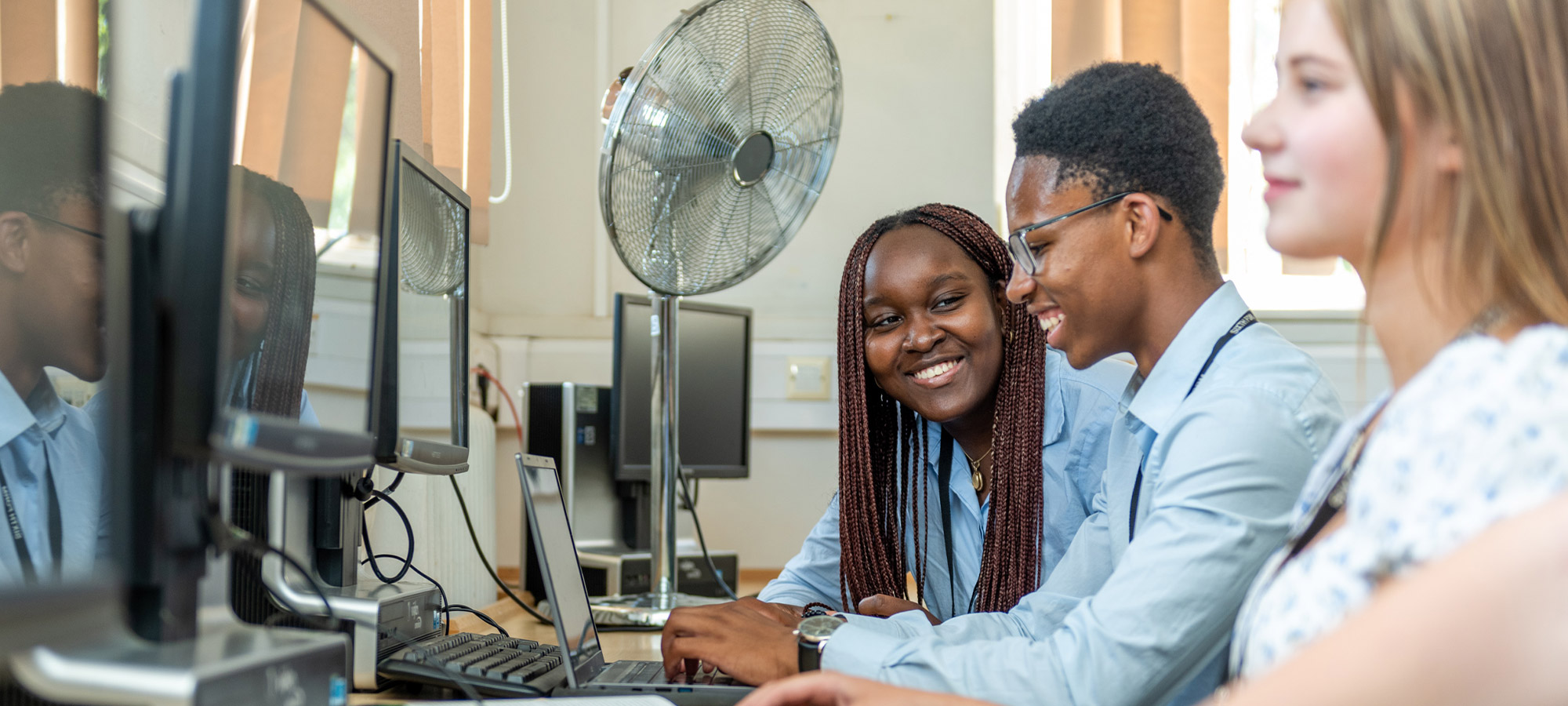
In an increasingly digital world computing/computer science is no longer a specialist subject but an ever present aspect of our lives.
At St. George’s, we believe it is vital that pupils are knowledgeable about the influence of the computer systems that they interact with and skilled in the application and use of the technology they are required to use now and in the future. Computer science is an excellent opportunity to investigate how computers work and how they’re used, and to develop computer programming and problem-solving skills.
In year 7 and 8 the computing curriculum has two aims. The first is to introduce pupils to the key principles of computer science. Pupils learn to use multiple programming languages through creative and collaborative projects that enable them to explore and enjoy the topics they are learning. Each topic aims to build upon and reinforce previous topics.
The second aim is to develop digital literacy, the ability to use information and communication technologies to find, evaluate, create, and communicate information. This includes the digital tools needed to access their secondary education eg email and google classroom as well as word processor, presentation and spreadsheet skills. Students apply their knowledge to cross curricular projects such as writing for social media or using graphics software to design a logo, using both teacher and peer feedback to modify and refine their ideas.
Throughout the course pupils explore the advantages and limitations of the technologies they are using and the benefits and hazards that they encounter in a digital world. Pupils are taught the importance of protecting their data and reputation online and allowed to explore the social ramifications of new and emerging technologies such as facial recognition, automated vehicles and advances in robotics. By the end of year 8 pupils should be confident and experienced users of technology able to apply that knowledge to their next phase of learning or in the future workplace. Year 7 and 8 pupils are regularly assessed on their work through a combination of end of topic quizzes and project work.
In year 9, pupils follow a course designed to prepare pupils for the rigours of GCSE, this allows them to make an informed decision when selecting their options at the end of year 9. The course has been designed not only to allow for a solid basis of understanding, but to engage learners and get them thinking about the real world application of Computer Science. This course provides learners with opportunities to become familiar with how computer systems actually work alongside developing their computational thinking, algorithms and programming skills. Formative assessment is carried out for every topic using quizzes and crosswords, and summative assessment takes the form of two exam papers which are scheduled for mid-year and an end of year and a coding project.
During KS3 pupils are taught in mixed ability groups for 1 hour a week. Prep is set once every other week and will not require any specialist equipment or programs, it will usually be to research and plan for an upcoming project or complete a quiz or worksheet.


Additional Opportunities
- Programming Club in GR15 every Wednesday lunchtime.
- Cybersecurity Club in GR15 every Wednesday/Friday lunchtime.
- KS4 & KS5 pupils take part in the ‘Bebras Challenge’ which is a national competition for computational thinking.
- Year 8 pupils take part in the CyberFirst competition. This is a national competition run by the National Cyber Security Centre.
Key teaching websites used: